
Overwhelmed by Self-Managing Supports? You’re Not Alone | Supports | NDIS | self care
| Free resource | Peer network | Uncategorised | News
| Text only
| Supports | NDIS | self care
| Free resource | Peer network | Uncategorised | News
| Text only
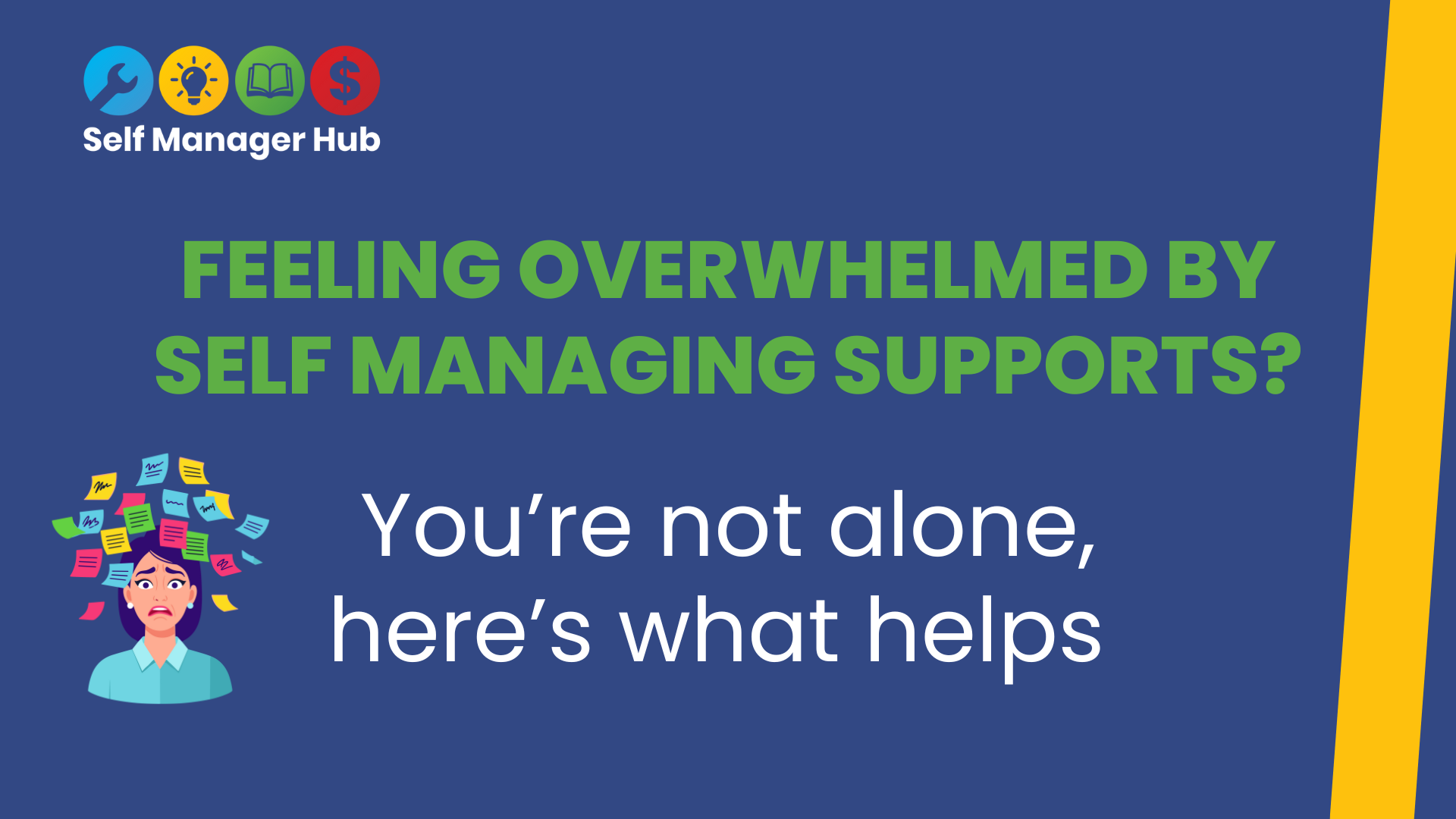
Feeling Overwhelmed by Self-Managing Supports? You’re Not Alone, Here’s What Helps
For many people with disability and our families, self-managing and self-directing supports can bring flexibility and control, but it also comes with constant, often invisible labour. This personal reflection from Self Manager Hub’s Dr George Taleporos explores why holiday periods can heighten exhaustion and sometimes overwhelm us, and shares practical, strategies to help you get through these difficult times.
This morning, I found myself crying mid-conversation. I was talking, then suddenly felt overwhelmed, and in that moment I realised what was happening.
This time of year is meant to be the most relaxing. I’ve taken annual leave. I’ve tried to step outside my routine with day trips and small changes, the things we’re told are meant to help us reset. But the truth landed today, the last few weeks have been anything but a holiday.
For many people with disability and chronic illness, taking a break is far from simple.
Whenever holidays come around, the work doesn’t reduce. In many ways, it increases. There are rosters to rethink, leave to coordinate, gaps to manage, and contingencies to plan for. At the same time, you still need to get out of bed, manage your health, and get through each day safely.
Much of this work is invisible.
Managing supports involves constant mental and emotional labour. You are always thinking ahead. Who is working when. Who needs time off. What happens if someone gets sick.
You worry that asking for help will create pressure or guilt or that raising a concern will risk your safety. These calculations run quietly in the background all the time.
You’re not just managing tasks. You’re managing relationships, emotions, risk, and responsibility.
For people with disability and our families, holiday periods often magnify this labour. Usual routines are disrupted. Availability changes. Familiar supports may be away. The systems that normally provide a bit of predictability loosen just when you need them most. What is meant to be a time of rest and relaxation feels like a period of heightened alert.
There is also a particular emotional weight in knowing that other people’s rest depends, in part, on your effort. You absorb stress so others can take a break. You stretch yourself so things keep running. You do it quietly, because there is no other option.
When I cried this morning, it was a response to weeks of sustained emotional exhaustion. It was the cost of holding everything together while telling myself I should be enjoying the time off. It was a reminder about how much invisible effort it takes to keep life functioning, and that effort rarely pauses just because the calendar says it should.
For many people with disability and chronic illness, we don’t have the luxury of switching off. We spend holiday periods working to keep things steady while managing uncertainty. We are working non-stop to survive periods that demand more, not less, of us.
I hope this personal post helps people who are struggling right now.
If you’re finding this time of year harder than expected, it’s worth remembering that you’re not alone. Many of us have to hold things together, even when the world expects us to switch off.
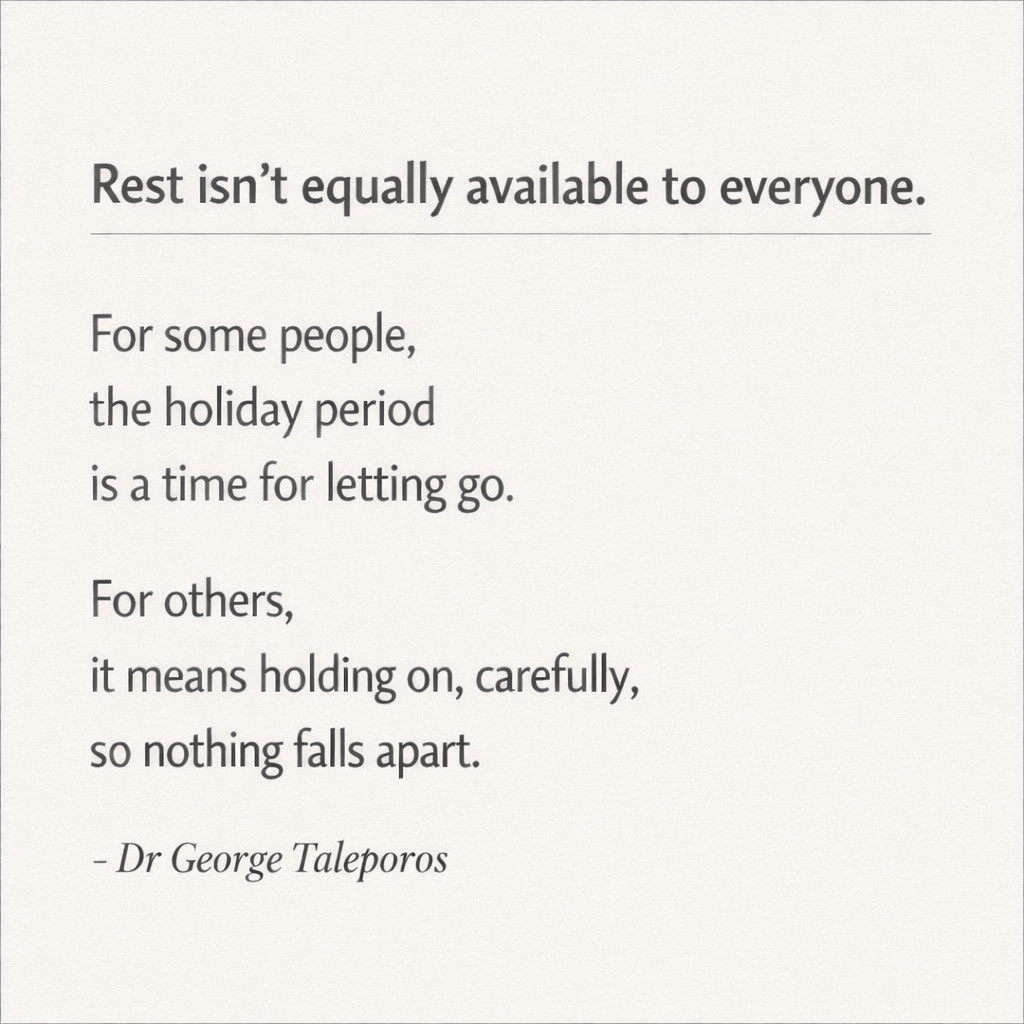
We need to realise that rest isn’t equally available to everyone. For some people, the holiday period is a time for letting go. For others, it means holding on, carefully, so nothing falls apart.
Practical ways to reduce burnout and overwhelm when self-managing and self-directing supports
It’s normal to sometimes feel overwhelmed when self-managing your support.
It is often the result of carrying too much responsibility for too long, with too little backup. While no strategy removes the systemic pressures people face, there are practical steps that can help reduce overload and protect your energy.
Build in buffers
Where possible, aim for more than bare-minimum coverage. Even a small buffer, a backup worker, or a flexible shift, can reduce the constant anxiety of “what if something goes wrong”.
Write things down so they are not all in your head
Use simple written systems for rosters, contacts, instructions, and contingency plans. This reduces mental load and makes it easier for others to step in if needed. It also helps you switch off, even briefly, without fear that everything will fall apart.
Set limits on availability
If you can, establish clear boundaries around when you respond to messages, roster changes, or non-urgent issues. Constant availability is a fast track to exhaustion. It is okay to protect blocks of time where you are not “on”.
Share responsibility and outsource where possible
This might mean using a plan manager or a bookkeeper for payments, payroll software for direct employment, or asking a trusted person to help with recruitment, paperwork, or problem-solving. Self-management does not mean doing everything alone.
Plan for harder periods in advance
Holidays, illness, and worker leave are predictable stress points. Preparing early, even with a basic plan, can reduce last-minute decision making and emotional strain.
Lower the bar during high-pressure times
Everything does not need to be optimised all the time. During intense periods, focus on safety and essentials. Let go of perfection and accept “good enough” where you can.
Stay connected to peer support
Talking to other people who self-manage and self-direct their supports can be grounding and practical. Peer spaces remind you that your struggles are shared, not individual shortcomings, and often provide ideas you would not think of on your own.
Pay attention to early signs of burnout
Irritability, tearfulness, constant worry, trouble sleeping, or feeling emotionally flat can be warning signs. Noticing these early gives you a chance to adjust before things become overwhelming.
Name the labour you are doing
Simply acknowledging that managing supports is real work can be powerful. It helps counter guilt, self-blame, and the pressure to “cope better” when the load itself is the problem.
Seek help before crisis hits
If things are becoming unsafe or unsustainable, reach out early to peers, advocates, or support services. Asking for help is not failure, it is a safeguarding strategy.
Self-management and self-direction can offer flexibility, autonomy, and better outcomes, but they also involve significant unpaid labour. Reducing burnout is not about doing more. It is about recognising limits, sharing load where possible, and giving yourself permission to rest when you can.
Simply acknowledging that managing supports is real work can be powerful.
Connect with peer support at Self Manager Hub
If this piece resonated with you, you don’t have to carry it on your own.
Self Manager Hub connects people with disability and our families who are self-managing and self-directing their supports through peer-led resources, groups, and conversations. Our work is grounded in lived experience and focused on practical support.
Peer connection can help reduce isolation and remind you that the challenges you’re facing are shared, not personal failings.
You can:
- access practical resources created by and for self-managers,
- join peer discussions and support groups,
- learn from others navigating similar challenges,
- share your experiences in a space that understands the invisible labour involved.
Many people find our Self Manager Hub Facebook group a helpful place to connect with others who truly understand the realities of managing supports day to day. It is a peer-led space to ask questions, share ideas, and talk honestly about what is hard as well as what helps.
If things feel especially heavy, it’s also important to know that confidential support is available outside your immediate networks.
You may wish to contact:
- Lifeline on 13 11 14, for 24/7 crisis support
- Beyond Blue on 1300 22 4636, for anxiety and depression support
Reaching out for help is a way of protecting yourself and maintaining safety during periods of high stress.
You deserve support too. Connecting with peers and trusted services can be an important part of sustaining yourself while continuing to exercise choice, control, and self-direction.
Subscribe to our website
Our website has loads of resources to help you self-manage and self-direct your supports. A subscription allows you access to premium content and can be claimed from your NDIS plan.